Learn the Art of Their Craft
Meet SYV Makers, Cassidy & Marko Alexandrou
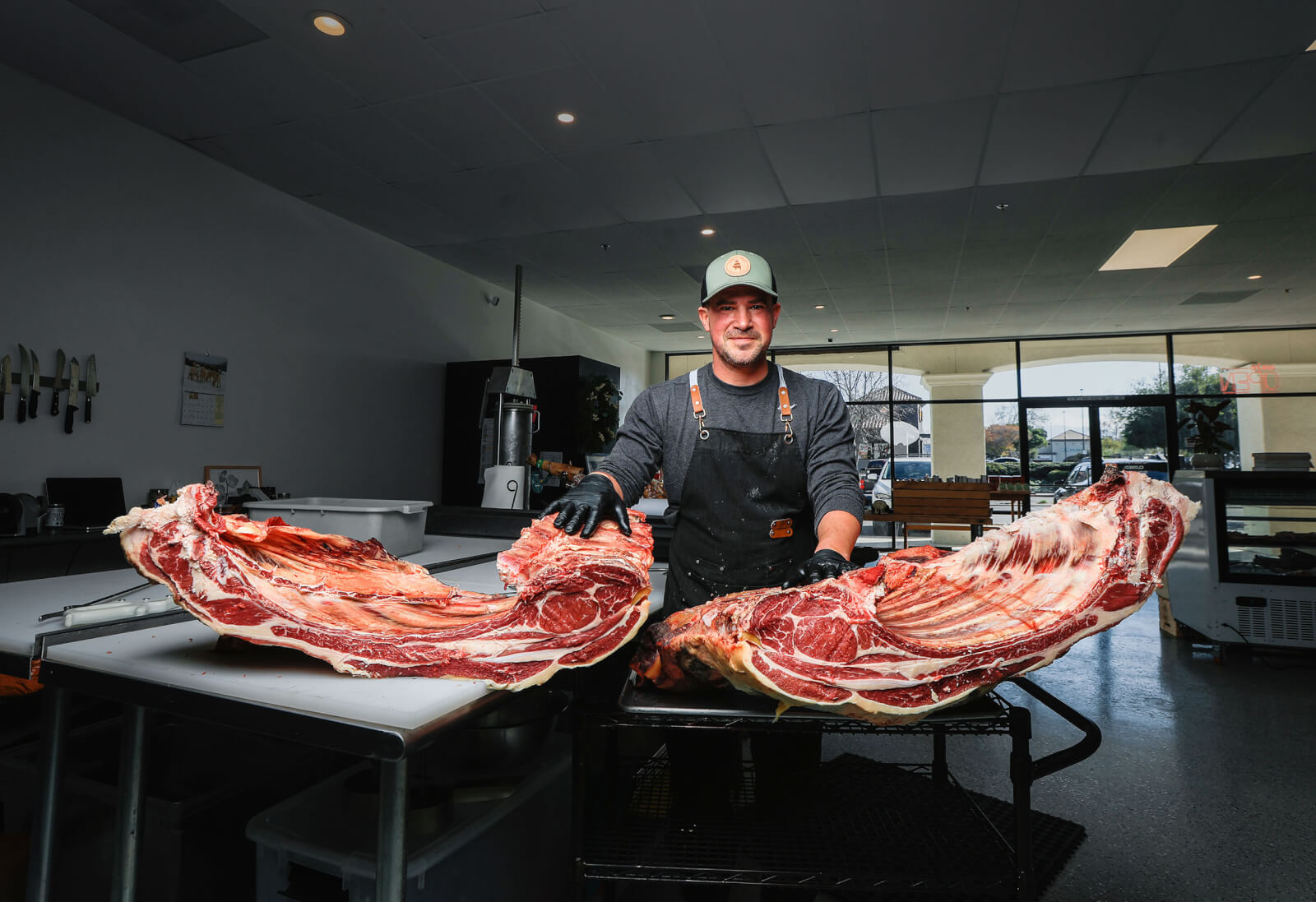
Meet Cassidy and Marko Alexandrou, owners of Motley Crew Ranch and Marketplace. Cassidy grew up on Bainbridge Island, WA, where her life revolved around the beach, the woods, and an ever-present love for animals. Coming from a “food-forward household”, Cassidy was immersed in culinary experiences from an early age. After graduating from UCSB with a degree in Environmental Studies, she discovered her true passion for food and pursued a culinary degree at City College.
Meanwhile, Marko’s upbringing on a small Greek island in the Cyclades taught him to fish, farm, and live self-sufficiently. Originally in Santa Barbara for his post-doc at UCSB, Marko and Cassidy connected through their shared interest in spearfishing—an instant bond that sparked their mutual dedication to food and its origins. Their island upbringings might have been worlds apart, but their passions for animals, nature, and sustainable cooking aligned perfectly. Here’s more from their journey.
You’re first-generation farmers, how did Motley Crew Ranch get started?
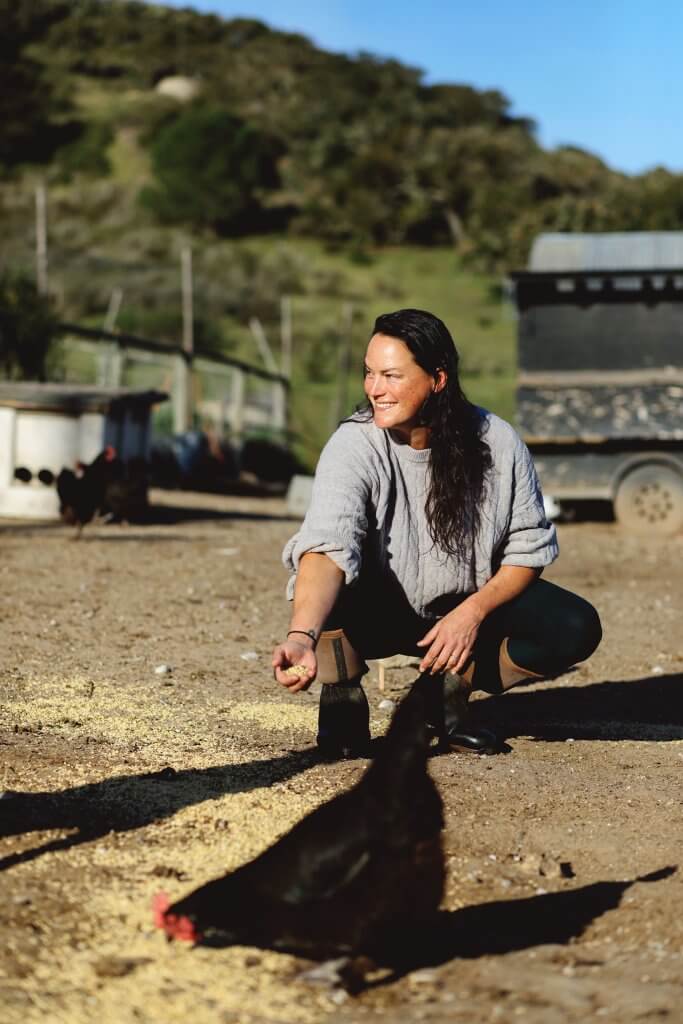
Cassidy: It really started when we moved to this valley. We found our current property through Craigslist – a farmhouse on 700 acres that used to be owned by Basque sheep herders. At the time, I was working at a winery, and Marko was a biologist. We weren’t thinking about farming, but we felt we had to get chickens. The disturbing lack of locally produced, humanely raised meat, especially chicken, in an agricultural community is really where it started.
We got the laying hens. They all had names, and I decided, “I can buy chickens that are specifically for meat. I’ll try it. I’ll raise these 10 chickens the way I want to raise them.” Then if it comes down to it, I obviously have to harvest them, which is really difficult for me as an animal lover. I probably watched about a hundred YouTube videos on how to kill a chicken. I raised these chickens, named them, moved them around in my organic garden every day, and made sure they had food. When the day came, I had to decide: “I have to do this or I’m going to give up meat,” which is a big deal for someone who grew up eating meat.
I did it. It was horrible. I hated it. I hand-plucked all 10 birds, did everything, packaged them, and put them in the freezer. It took me a while before I could eat one. There was a mental block—they were my children, and I killed them and threw all their feathers in a bag.
Eventually, I got the courage to roast one, and it was the best chicken I’d ever tasted. I had an “aha” moment—this is what chicken is supposed to taste like. Holy moly! It really snowballed from that point. I realized I could do this. It’s not easy, nor should it be. Taking a life shouldn’t be something the average consumer ignores. It’s a reality of eating meat, and that bolstered the passion Marco and I have about giving our animals the best life possible.
It snowballed from there. Our friends and our friends’ parents said, “We tried one of your chickens and it was fantastic. Can we buy 10 more?” We realized there was a demand, so we had to figure out the logistics. Eventually, we had so many animals that we were both working our separate jobs, coming home, and jumping right into caretaking. It was exhausting. We sat down and decided we weren’t happy working for other people, can we make this work? For better or worse, we jumped in full force, quit our jobs, and built this from nothing. It’s been an interesting and nonstop challenge—still is. My biggest takeaway is how hard it is to farm.”
Tell us about your farm.
Marko: Our farm is multi-species. At one point, we were raising up to 12 species: cows, pigs, goats, sheep, rabbits, turkeys, quail, chickens, guinea hens, ducks—you name it. It’s a small plot of land, but we manage it in a way that everyone is comfortable. Our focus is on the animals having space, getting the best quality feed, and living the best life possible. With bigger animals, we move them to different properties to graze, working with a network of landowners who needed fire hazard reduction. We’d bring our flock of sheep for a month at a time, which gave them more space, helped the community, and was a win-win situation.
What are some of the challenges you face as small farmers?
Cassidy: Whether you’re a 10th-generation or first-generation farmer, there are unique challenges like not having land, equipment, or inherited knowledge. The push toward industrializing every part of our food system makes it nearly impossible for small farmers to succeed. There’s a big disconnect between consumers and the work involved in raising animals humanely. The regulations, though sometimes meant to protect the environment, can force consolidation and don’t always align with the needs of small farmers. Deregulating the food system, particularly allowing local processing facilities, would make farming 100% easier. We also face the challenge of educating consumers about the realities and costs of humane farming. Farming is inherently hard and involves constant challenges.
Marko: Our biggest challenge has always been harvesting animals and where that can happen. We have to drive two or three hours north to find a suitable facility, and there’s a backlog. A local harvesting facility for larger animals would be critical. There are a lot of regulations acting as roadblocks.
Politicians are so disconnected from their food, and we lack the time to educate them. There’s a model in Britain that restricts animal transport beyond a certain radius. If you need to harvest your pigs, you can’t transport them more than a set number of miles, which forces the existence of slaughtering facilities closer to farmland. Other countries are exploring similar ideas, partly because transporting animals long distances contributes to their suffering and increases the carbon footprint.
What do you wish more people knew about the effort and investment behind what you do?
Marko: We have decisions to make as consumers. Basically, we can decide to do something good for ourselves, our health, and the health of our planet, or we can choose not to care. If we choose not to care, we can go to Costco and buy a chicken for $4.99—and probably regret it later when we’re at the doctor’s office paying for expensive surgeries. It also hurts the animals, because birds raised for those places have a terrible life, and we’re striving for the complete opposite.
For context, buying a baby bird we raise for meat already costs $4.99. It’s a completely different scale just to raise it and feed it. The good-quality feed we use brings the cost of that chicken to over $20, so when a consumer pays $30, it has cost us $25. Most people don’t realize how significant the cost of raising animals correctly can be. Part of doing it right means they’re not living in their own waste; they live outside like real chickens should. That’s very different from mass farms and takes far more time and effort. We don’t even factor in our own labor, so it almost makes no sense—but we’re passionate about providing our local community with good-quality food.
Another thing people don’t realize is that chickens can be a seasonal product for us. In winter, they don’t do well and can even die in freezing temperatures. That’s just the reality of raising chickens. Most consumers would never think of chicken as seasonal. You might consider tomatoes seasonal, but even in California, this is a reality that we face as farmers.
Cassidy: It’s just the two of us and we’re doing every aspect of it. The feed we buy is the best we can find—organic, corn- and soy-free, which is expensive on its own. Then think about how much each chicken eats. We raise slower-growing chickens because we don’t believe in the industrialized model of sad overbred things we’ve developed. Instead of six weeks for a Costco chicken, it takes us 14 to 16 weeks to raise a meat chicken, so of course it’s a completely different product. They eat much better feed and live an incredible life, which translates to a higher price, and there’s a disconnect about that.
I think it’s important for consumers not to just see an ‘expensive chicken,’ but to realize it was raised on pasture by a farmer putting heart and soul into it every day. As much as we can, we try to educate people, even though it’s just the two of us.
Marko and I also talk about how pre-World War II, people didn’t eat as much meat because it was expensive. And it should be. We’ve industrialized everything, which has hurt animals’ health and our own. Meat should cost a lot, and you shouldn’t eat a ton of it, but when you do, support a small farmer who cares about the animals. That’s part of the shift we’re trying to bring to this community.
Can you elaborate on the concept of terroir and meat?
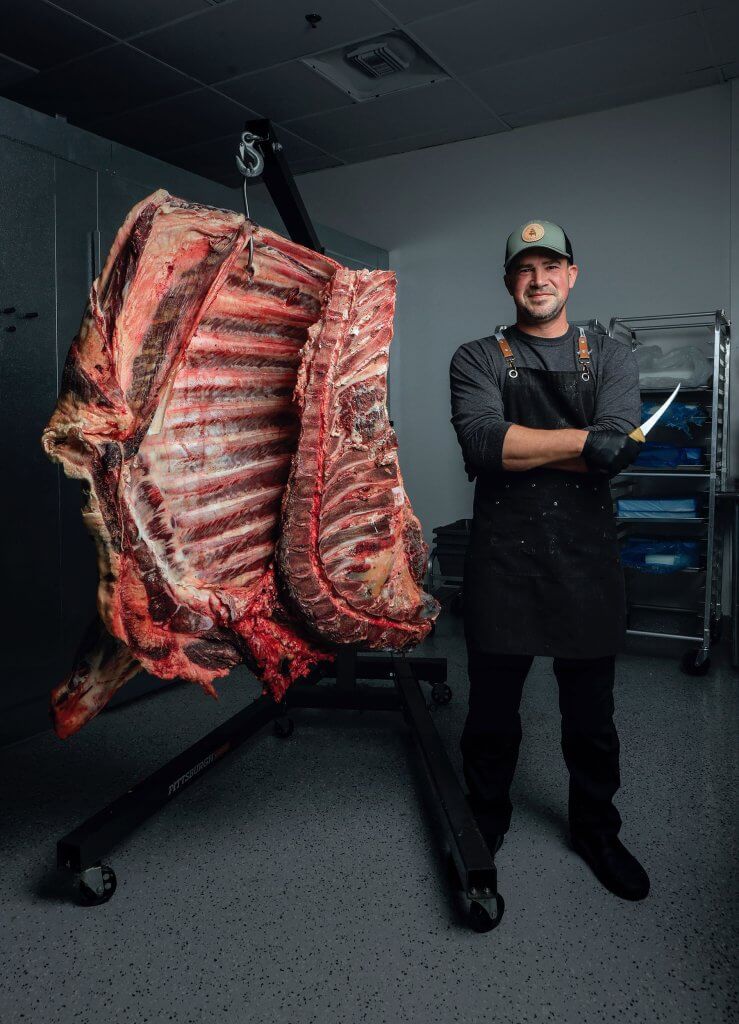
Cassidy: Having grazed our animals in different parts of the valley, especially sheep, their diet translates to the flavor of the meat. For example, an animal eating sagebrush will taste more like sagebrush. The flavors come through in the fat. Because of the industrialized model, conventionally raised animals consume things like glyphosate-sprayed corn, and those residues end up in their fat. Our animals, eating wild brush or oats, have a milder but more nutrient-dense flavor.
Terroir is a thing for animals, not just grapes. Even our chickens, we let them out into organically farmed vineyards with cover crop. They might sneak some grapes here and there, and I like to think their eggs taste better because of it, instead of being stuck in a warehouse eating whatever they’re given. Terroir makes a big difference for our animals and how I think they should be raised.
Marko: Similar to wine, where soil, microclimates, and environmental factors affect the flavor, with meat, if animals are grazing in the field, eating wild grasses, flowers, bushes, and sage, their access to diverse local plants definitely affects the flavor.
If you took a cow, for example, that’s in a feedlot being fed corn, the last phase of its life, and compared it to a cow from a local pasture at the peak of spring, you’d have two very different steaks. One would be nutrient dense and rich in flavor, and the other bland and nutrient deficient. Depending on the diversity of plant life available to a grazing animal, that would definitely affect its flavor.
It’s a thing that also impacts the meat’s nutritional value—the more diversity the animal is grazing on, the higher the nutritional value of that meat.
It’s kind of intuitive, but unless you’re thinking on that scale, most producers don’t really care—animals get shipped off, and they don’t even eat their own beef; they’re just doing it for money and tax breaks. If you care about the meat, you care about the animals, and you care about the land, then, it all comes together to bring something of much higher value to everyone locally.
What prompted you to launch the CSA and now Motley Crew Marketplace?
Marko: Our CSA started during COVID when restaurants, which we supplied, were struggling. We pivoted to direct-to-consumer at a time when meat was hard to find in grocery stores. People have always been really excited about it, especially those passionate about food and cooking. People are craving a personal relationship with their food, and we’re trying to fill that need.
Growing up on an island in Greece, everyone did different things: you’d pick up a chicken from one farm, eggs from another, and vegetables from another. Everyone knew exactly where to go and how to source what they needed. We’re so disconnected from that here, so it’s exciting to bring a bit of it back. People are seeking out farm stands and taking pride in knowing where their food comes from, and even restaurants feel the same way. That helps drive our business, supports other small farmers, and benefits the community at the same time, making it a win-win.
Cassidy: Having the farm and starting the CSA helps us bring people into our world—even though farming isn’t pretty; it’s messy, especially with animals.
We’ve had a lot of people tell us they started eating meat again after joining because they finally had an option they felt good about. Some were vegans or vegetarians who decided to reintroduce meat because they saw a positive trend in how we farm. I nearly became a vegetarian rather than kill a chicken myself, so I understand. I love that people who care about animals can change their lifestyle again after seeing what we do. It’s a cool thing that makes me even more passionate.
Part of the reason we stuck with building out the Marketplace through the hundreds of thousands of dollars and all the stress of figuring out how to build something in Santa Barbara County, is because we want to be that avenue for other farmers to have a place where they can sell and promote themselves, because that’s something that we didn’t have.
I want to encourage other young people and multi-generational cattle farmers that are now realizing they may have a place where they can sell their beef direct to consumer. They don’t have to ship off all their cattle to Kentucky or wherever. That’s something I’m really passionate about is growing this shop and growing the knowledge that we can be a community resource for them.
Have you had moments that have been especially affirming during your farming journey?
Marko: Seeing the meat we produce on the menus of respected local restaurants, elevating that product way beyond what we could ever imagine. Seeing our rabbits on Bell’s menu or our lamb in Clark’s restaurant at Full of Life Flatbread, or Pico, or Peasants Feast—all these people are friends of ours. Nick next door at Na Na Thai is incredibly talented, and having that synergy between two adjacent spaces, where we can provide him with the majority of his meat, is really rewarding.
Then other people see it too, and they’re curious about our farm, so they want to come in and talk to us. That creates a sense of community between us, the chefs, and the other customers who are eating at those places. There’s a mutual respect and we only work with people who understand that, because we have limited product.
What ties the makers in the Santa Ynez Valley together?
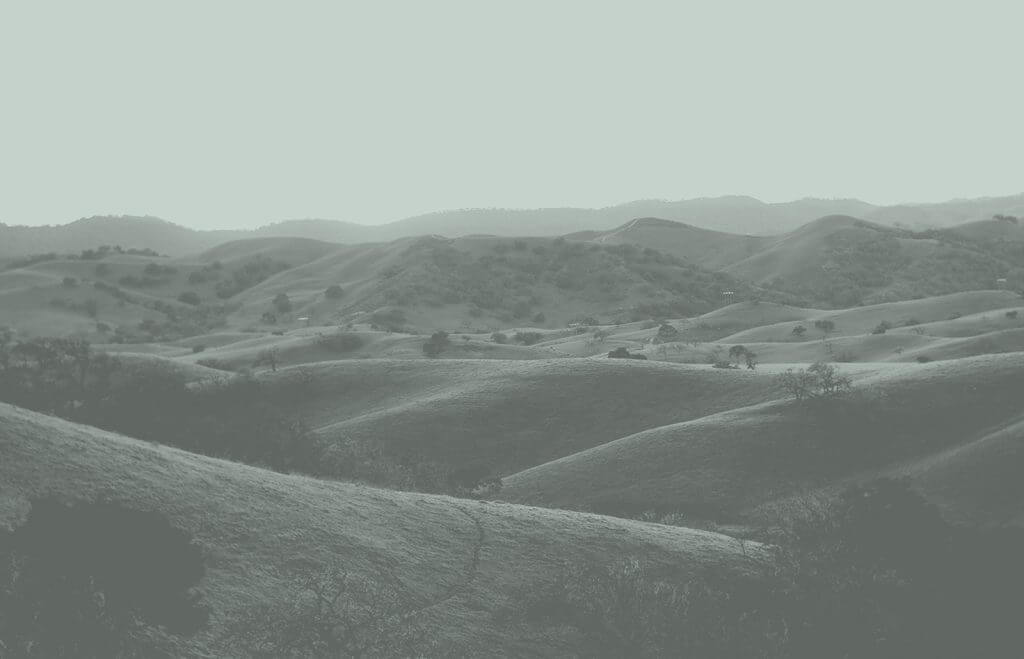
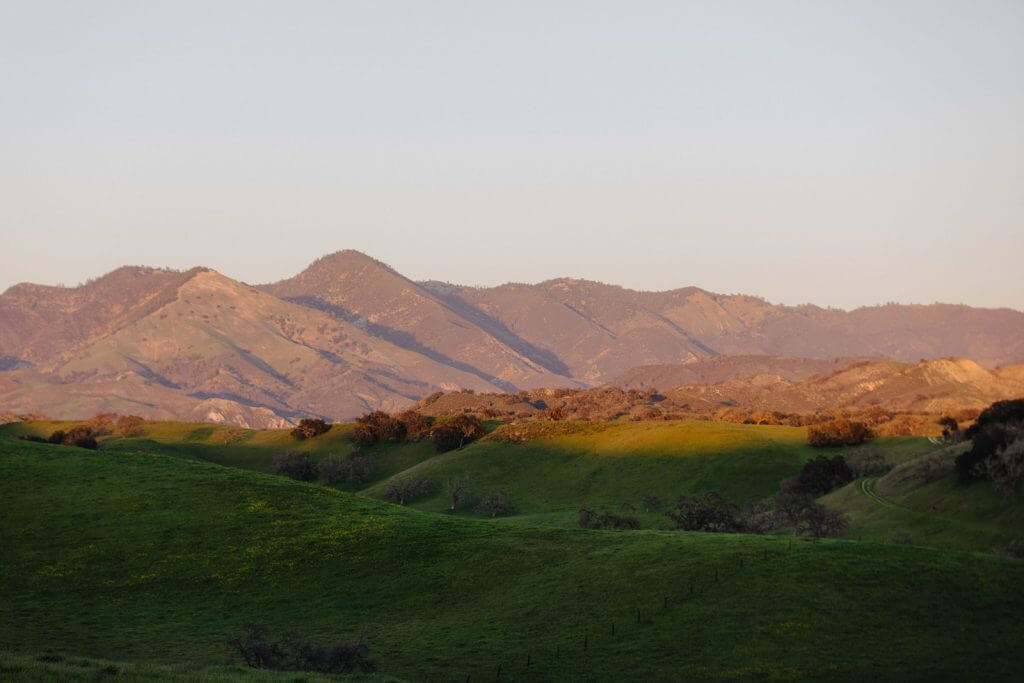
Cassidy: This is a beautiful place with incredible resources like the Channel Islands for seafood and a climate that allows us to grow almost anything. The environment plays a huge role in our ability to do what we do. This creates individualized passions, from wine to farming. Being in close proximity allows us to support each other. It’s a cool feeling to be part of such an incredible community of funky and weird people who play off each other.
Marko: I definitely think the thread is this place — the valley, with its diverse landscape, microclimates, and a dense concentration of people who really care about their food, wine, and fish. We live in a special part of the world. Aside from a shared passion and obsession with what we do, the environment we live in creates that obsession because within a short distance, you can do so many things: fish, grow grapes and vegetables, and raise livestock. It’s a diverse landscape made up of diverse, passionate people.
What do you do on your day off in the Santa Ynez Valley?
Cassidy: We love being outdoors on our 700 acres, hiking with our dogs. We might go to Fig Brewing, Jalama for a walk and burger, or Bodega for wine or beer. We also enjoy walking to local restaurants to say hi to the owners and then head home early. We also love hiking and swimming with the dogs at Red Rock. The best part is the beauty, the outdoor activities, and then being able to have a drink and see friends.
Marko: We might start by hanging out at the farm and enjoying the view. We’d go for a hike, then maybe Fig Mountain Brewing for a beer, and then to one of our favorite restaurants for lunch. We just enjoy this place we live in, the beautiful weather, and the community we’ve built.