Learn the Art of Their Craft
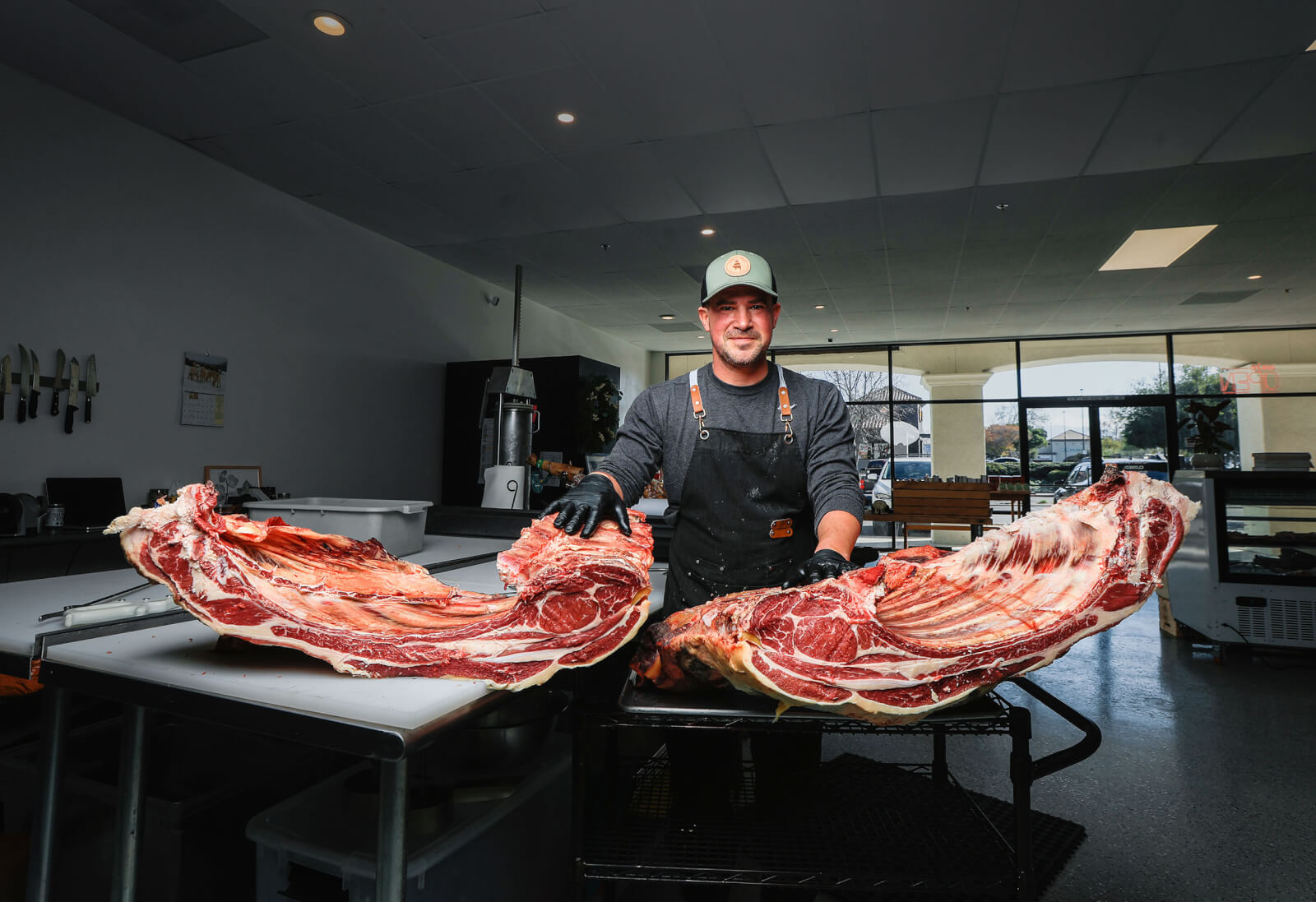
Meet SYV Maker, Jake Francis
We sat down with Jake to learn more about his cooking style.
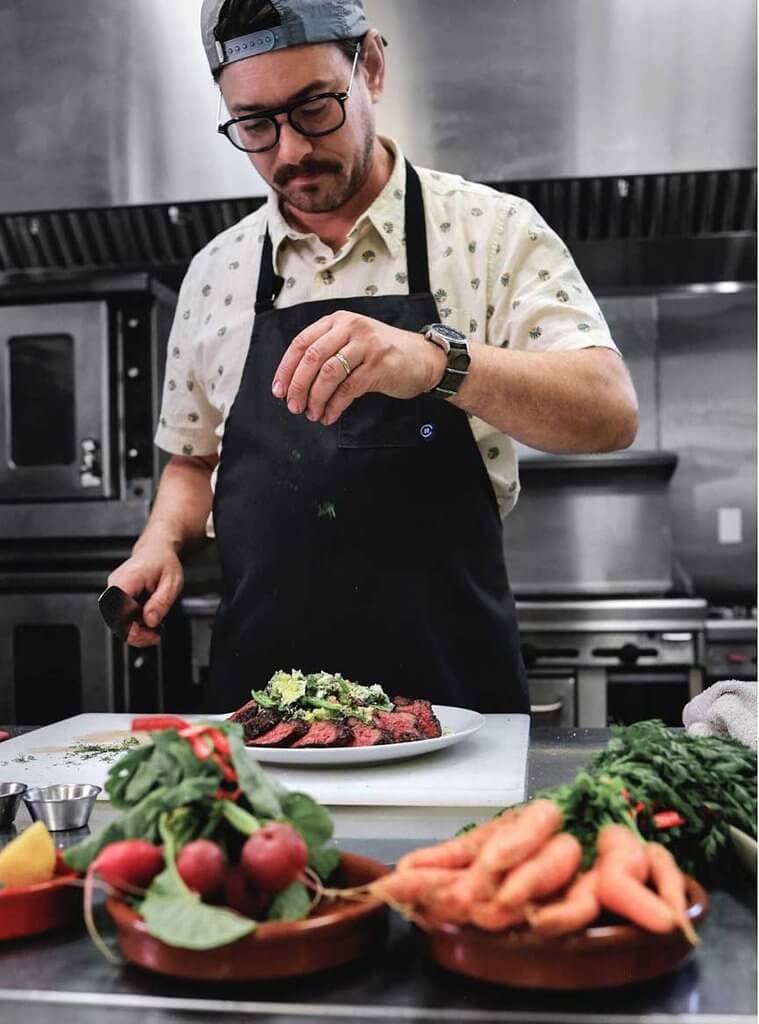
Tell us about some of your early experiences working in the kitchen and then on a farm.
Jake: I was working at Marlow & Sons, a diner up in Brooklyn. They were kind of the vanguards of the farm-to-table movement 20 years ago. Once every six months we’d do a field trip where the staff would head upstate and visit some of our farmers that supplied us. We’d do tours, have lunch, drink some wine, hang out, and make a field trip of it. It was such a cool experience, but I didn’t want that to be my once-every-six-months experience, I wanted it to be my daily experience.
I reached out to a friend who’d managed a restaurant in the East Village about my plans, and she introduced me to some contacts in Georgia. I emailed the GM at Farm 255 and she had me visit for a few days to check out the farm and the restaurant. A couple months later, they invited me back for the entire summer—which became a year, then three. Each day, I’d spend my mornings on the farm and my afternoons at the restaurant, witnessing firsthand how seasonality shapes the menu. It was amazing to see how the farm informs the restaurant and vice versa.
One of my first days on the job, I had to weed the row of carrots. It was maybe 30 yards by a yard with three rows of carrots. The carrots were so small at that point that they could get shaded out easily by weeds, so you had to go through on your hands and knees and pick out these little weeds. But the weeds can look very similar to the carrot tops, which were about an inch tall. So, you’re down on your hands and knees, three people taking maybe an hour to go through this entire row, meticulously pulling the weeds. When you get done, you look at what you’ve accomplished, and it’s not that much land—maybe 60 or 70 pounds of carrots total—but that was one day. You had to do that every couple of days until the carrot tops got tall enough they wouldn’t be shaded out.
That was my first real eye-opening experience. It made me think about when you go into a grocery store and see a pile of carrots at Whole Foods, and you take for granted that it’s there. But the work that it takes to get it there, especially doing it by hand, is not so much difficult as it is meticulous. The effort that goes into it gave me a newfound appreciation for those items in the kitchen. You don’t just see them as a bunch of carrots to peel and throw in a salad. You have more respect for how they got there.
Tell us a bit about your story with Valley Piggery and what brought you to the Santa Ynez Valley.
Jake: My then-girlfriend, now wife, and I were planning on leaving Athens. We had a few leads in the Finger Lakes and Western Massachusetts. Then, she graduated with a degree in horticulture from UGA (University of Georgia) and applied for a job out here, based in Lompoc—the former flower capital of California. So we decided to move west kind of on a whim.
When I got out here, I had no prospects. I ended up working for John De Bruin for a while—DeyDey’s Best Beef Ever, which was a grass-fed beef company. I just drove in there one day and asked if he needed help on the farm. He hired me to do a pig program because of my past experience in Georgia.
I worked for him for about a year, then at [Full of Life] Flatbread, and then had an opportunity to start my own pig operation—hence Valley Piggery [Jake’s former catering company]—in 2012. The main reason I started was because of the accessibility to Cal Poly for all the federally certified processing. That’s a bit of the bottleneck in the system: people want locally raised products — local beef, local chicken, pasture-raised pork— and people want to raise them but the problem is getting them processed in a way that is federally or state certified. The availability of Cal Poly kind of encouraged me to start my own operation again. Unfortunately, something did change with Cal Poly and that’s the reason I stopped raising livestock.
How did raising pigs change your mindset as far as your recipes and dishes? Why should we be using the whole animal more often and supporting businesses that do?
Jake: You see a lot more people doing whole-animal usage. It’s like the carrots: when you’re involved in growing them — weeding the rows, understanding that process — you have a lot more respect and reverence for it. The same with animals: you raise them, take them to the slaughterhouse, pick up the half-pig and the head a week later, bring it to the kitchen, and you’re like, “All right, cool.” You have a lot more respect because you were so involved with its life.
It’s also about maximizing resources. With a pig, you’ve got the head and two halves. The center half is the belly, the pork chops, the ribs—all easy to sell. Then you have the two other primals, the ham primal in the rear, and the shoulder primal with the Boston butt, picnic butt, the trotter. You have to figure out how to turn a profit on those other pieces. The head might become porchetta di testa, the trotters might get braised, pickled, and turned into crispy fritters—what I call “trotter tots,” which can become an $18 appetizer. You’re taking something not attractive or easy to sell and turning it into something great. That’s where you start to see profit margins: porchetta di testa, fried trotters, using the skin to make chicharrónes, etc. Maximizing every piece of the animal, it’s not just trendy—it’s a financially necessary thing for a kitchen who wants to do whole animal usage.
It’s also about respecting the animal. My first boar is Elroy, and he’s right here on my heart. He was a great pig. He almost extended from me to you—maybe not quite, but he was huge. You could walk up to him and start scratching his ears, and he’d be into it. You could scratch his back, and you could even lay on top of him and scratch his ears. He was super gentle, super sweet.
I named the pigs and I got to know them. It’s like a sitcom out there; all the pigs had different personalities. There are all kinds of stories about different characters we had, and they’d interact in different ways—they’re just hilarious.
I think that with whole animal usage (or whole animal husbandry), there’s more respect for the animals. There’s inherently more respect because you’re trying to maximize everything, and you want to honor them in the kitchen by using every part. You’re not just throwing parts away; like the kidneys, we’d chop it up and boil it with a little liquid, sweet potato, spinach, and carrot—then sell it as dog food. We use everything.
I always say, ‘Respect and love them in the field; honor them in the kitchen and on the plate.’”
What inspires your dishes now?
Seasons are always inspiring. I come to the farm to see what’s new. Like, right now, it’s winter so I love a winter salad. I love apples in salads and the bitterness of radicchio. I love bitter greens—like mustard greens. I love citrus, which is not a summer fruit like people think. Citrus is a winter fruit, from around October to January or February. I love a citrus salad with shaved fennel and oil-cured olives, Aleppo pepper, some good olive oil, etc.
You can kind of read the year through the seasons and through food—like when tomato season is coming up. At the end of May you start to see some cherry tomatoes, then into June and July it’s full-on tomato season.
And there’s a cyclicity to the year where you kind of see through food and the dishes and where they come from. Having a pork chop smothered with a Dijon cream sauce and caramelized onions is a great dish, but you don’t really want that in the summer. But you have it in the winter and you’re like, ‘This is winter, it’s January. This is what we’re eating.’
I had a chef I worked for at Marlow and Sons who said, ‘I want to have a real seasonal restaurant where we only serve turnips, parsnips, potatoes, and steak for like three months,’ because in New York there’s a bit more seasonality—shorter growing seasons. We have a bit of a faux winter here in California, since we can get tomatoes practically from May to December. We have that luxury, but we still see different things come in that let you foretell the season and then represent the season on the plate.
As for who I usually work with—Motley Crew Ranch for pork, chicken, eggs, squab, rabbits, and now some great sardines from Markos, who’s doing some fishing. Stephanie and Travis for fish. Most of my vegetables come from Finley and from Shu at The Garden Of.
As much as we can, we support the local guys—keeping the dollar inside the valley and the community. I know all these people; both Finley kids work for me as servers for our catering operations. I’ll spend Fish Night—our annual fish-focused pre-Thanksgiving celebration—with the Motley Crew folks. It’s a pretty tight-knit community, so it’s nice to be able to work with them through and through.”
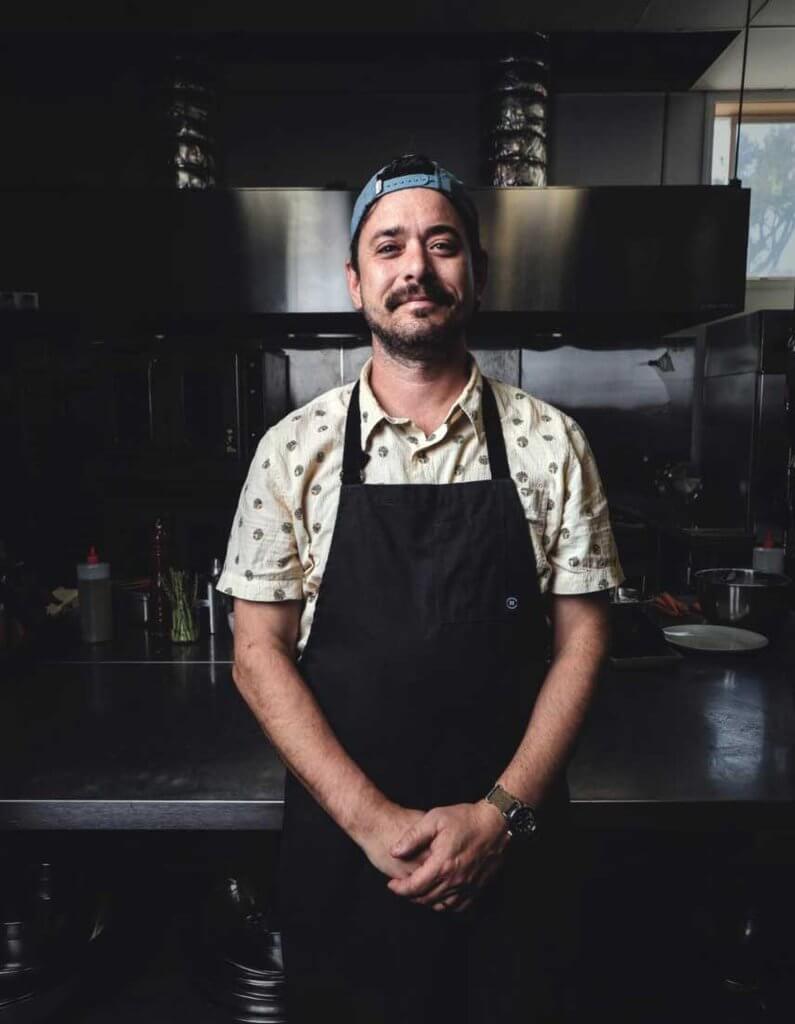
Q: What do you think connects all makers together, and do you think people are born makers or can anybody become a maker?
“I think anybody could be. I mean, you’re not born a maker; you become a maker by following a passion, you know?
For me, despite all the computer work, admin tasks, and small-business responsibilities, I’m happiest when I’m in the kitchen—whether it’s whipping up a big batch of bolognese, hand-cranking sausages, or just caramelizing onions. Even after a full day of cooking, I still love preparing meals at home because it’s the act of creating—taking raw ingredients and turning them into something tangible—that excites me. Rolling out pasta, making ravioli fillings, forming the raviolis—it’s all about that hands-on experience. The administrative side is just part of it, but the real joy is in the making.”
Q: What do you wish the average person knew about being a chef, or what farmers do, that they might not know—say someone from L.A. who works in investment banking?
“With cooking in general, people will say, ‘Oh wow, you’re such a wizard,’ or, ‘This is so amazing.’ It’s often not that hard. I wish more people had a general understanding of cooking—simple, basic things like how to make a vinaigrette. Once you know how to make a vinaigrette, you can do so many things: make a marinade, understand emulsification, etc. You can use a vinaigrette-like approach to dress a beef roast, for instance. That basic knowledge can expand in a hundred different ways.
I wish people wouldn’t be so fearful or intimidated by cooking. It’s very much a fun thing to engage in. And supporting your local farms is a commitment to re-engage your kitchen, because you’re not getting anything prepackaged—you get the raw vegetables, the ground pork, and from there, you have to create dinner.
So, I want to encourage people to re-engage their kitchens and the making of food. It’s not that hard or intimidating, and it’s so rewarding.”
Q: Describe your best day in the Santa Ynez Valley?
“If I happen to get a Saturday off, I might wake up, have a chill morning, walk into Coast Range for brunch, maybe partake in bottomless mimosas but not too much, come back home for a siesta. Then, go to Sunny Fields Park so my son can run around, wander into Los Olivos, maybe have oysters at Bar Le Côté, then dinner at Nella, and call it an early night.”
Q: How can a visitor live like a local here for a weekend?
“If their Airbnb has a kitchen, I’d say go to the Finley Farm Stand. It’s on the honor system, which blows some people’s minds. Then seek out little spots off the beaten path—Storm, Dreamcôte, maybe Caesar’s Car Wash in Santa Ynez for classic tacos, lengua. One of our favorite things if we have the whole Saturday is to go to Jalama Beach, get a Jalama Burger, and spend the day on the sand with a tallboy and a bag of peanuts, then watch the sunset.”
Q: How does the slower speed of life in the Santa Ynez Valley compare to New York City or Athens, Georgia?
“If I get a 14-second delay in Solvang traffic, I’m like, ‘Oh God, this is terrible, we’ve got to get out of here.’ And I don’t actually believe that, but it shows how accustomed we’ve gotten to how easy it is here.
In New York City, we deal with some of the grind and chaos of a big city. I loved it—I didn’t have a car, but I loved the subway, that vibe and the hum of people. Then I went the exact opposite when I moved to Athens, Georgia, which is more like where we are here. I bought a giant truck, worked on a farm, and enjoyed that aspect of life—driving through the backwoods of South Georgia with my livestock trailer to pick up five piglets for the farm.
Here, it’s an easy pace, especially in the last 10 years. The pace hasn’t changed, but the valley has grown a lot. You see new restaurants and hotel projects, but I don’t think the valley’s fabric or identity has changed or been lost. We’ve gotten new notoriety, restaurants, Michelin stars, and so on. The testament to that is how many people want to come up here—they’ll drive from L.A. just to spend three hours walking around Solvang or come to Los Olivos for four hours.
I think the pace is wonderful; I really enjoy it. That’s why we’re still here, and why we have people making homes, families, and businesses up here. They all thrive because so many visitors come and enjoy the pace of life but we also get some big-city draws with the restaurants, hotels, and amazing wineries.”